
Have a vision for a dining table, bar top, or home office desk that doesn’t exist yet? Jeff and his team hand-build each piece from premium hardwoods and precision-poured epoxy — custom to your space, your dimensions, and your style.
You already know you want something different from what you’d find at a big-box furniture store. The problem is finding someone who can actually execute your vision — the right wood species, the right dimensions for your space, the right epoxy color to complement your home. Most furniture shops hand you a catalog. We hand you a piece of black walnut and ask what you’re building.
Epoxy work especially demands technical precision. A mismanaged pour — wrong layer depth, wrong resin-to-hardener ratio, ambient temperature not controlled — produces cloudy resin, trapped air bubbles, or a surface that yellows within a year. This isn’t a DIY-friendly project, and it’s not one to hand to someone who learned it on YouTube last month.
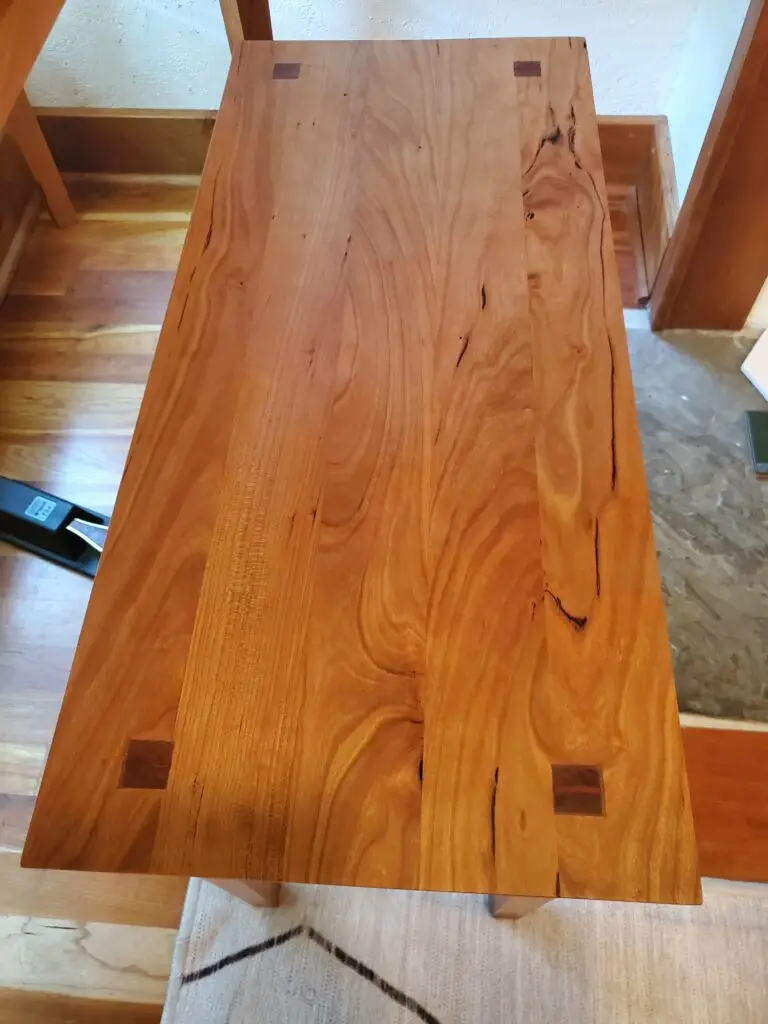
Every piece that leaves Mitchell Woodwork & Remodeling is built from scratch — no kits, no pre-cut blanks, no stock dimensions. Jeff works directly with you from the first consultation through final delivery, selecting the slab, designing the pour, and finishing the surface to match your home exactly. Whether you’re after a live edge river table for the dining room, a resin-flood bar top for the kitchen, a hand-built desk for your home office, or floating shelves that tie a room together — the process is the same: careful, methodical, and completely yours.

Mitchell Woodwork maintains an in-house live edge slab inventory, so you can walk in, put your hands on the wood, and choose what becomes your piece. Available hardwood species include black walnut, white oak, hard maple, cherry, and locally sourced Texas species including mesquite and pecan — each with its own grain character and natural edge profile. Slabs are properly milled flat using a router sled or wide-belt planer before any joinery begins. Traditional techniques — mortise-and-tenon joints, dovetail work, precision glue-ups — are used throughout. No shortcuts in the structure.

The epoxy side of Mitchell’s work uses a professional-grade two-part resin system mixed at precise ratios by weight — not volume, which is where amateur pours go wrong. Resin is poured into melamine-coated molds in controlled layers of ½” to 1″ at a time, with each layer curing 16 to 24 hours before the next is added. This controlled layering is what produces crystal-clear results without cloudiness, heat cracks, or trapped air. Bubbles are removed with a torch during the wet phase. The fully cured surface is wet-sanded progressively — from 220 grit up through 600, 1,000, and 2,000 — and then polished to a glass finish or left satin, depending on your preference.
Once the epoxy is cured and polished, the wood surfaces receive a topcoat appropriate for the piece’s use. Food-safe applications like bar tops and dining tables are finished with Rubio Monocoat or hardwax oil — products that penetrate the wood fiber rather than sitting on top, so they don’t peel or yellow over time. High-traffic surfaces can be finished with a catalyzed polyurethane for maximum durability. Jeff walks every client through the finish options and explains what each will look and feel like after years of daily use.
Fabrication for custom furniture and epoxy work typically runs 2 to 6 weeks depending on complexity, with progress updates provided throughout. Finished pieces are delivered and placed in your home — and if the furniture is part of a broader kitchen, bathroom, or whole-home remodel, Jeff’s licensed general contractor background means it integrates seamlessly into the surrounding work. You deal with one person, one shop, and one clear proposal from start to finish.

Discover what our satisfied clients have to say about their experience with Mitchell Woodwork & Remodeling.
Trustindex verifies that the original source of the review is Google. Jeff's commitment to his work, as a human-to-human service to his customers, are unparalleled. I have worked with many contractors over the years on various houses, but Jeff is the best. I met with him once, for approximately 15-20 minutes and sketched out the various additions I wanted, including two large bookshelves for my study (see photo for one of them). After that, we communicated via text messages and phone calls. Jeff kept me posted about every step: measuring, spelling out my requirements, specifying the shelves via drawings (plus the electric outlets that come through), the selection of the wood, the choice of lacquer, all the way to the installation (which came with a short video). When I actually got back, the work was done and it was perfect. Don't bother to consider alternatives if you live north of Austin.Trustindex verifies that the original source of the review is Google. Jeff is AWESOME and QUALITY!! His integrity and timeliness along with attention to detail blew me away!Trustindex verifies that the original source of the review is Google. Jeff and his crew are outstanding! They do exceptional work, communicate throughout the process, and are kind. I highly recommend working with them.Trustindex verifies that the original source of the review is Google. Best ever! You can’t go wrong with these guys! Jeff is personal and a man of his word!Trustindex verifies that the original source of the review is Google. My kitchen remodel was truly a one-of-a-kind. The cabinets, with inset doors, were made of hand-selected rift-sawn white oak. The wood is stained, and it’s so beautiful it grabs your attention. Building these cabinets required near perfect craftsmanship. There was very little room for error. The free-floating 3 inch thick, solid white oak shelving over the coffee/beverage bar was hand-hewn by Jeff Mitchell and installed using “invisible” steel rods to support these very heavy artistic wooden pieces. He embedded under counter lighting under each shelf. The results are so eye-catching that it summons you to the counter for a cup of coffee just to look at the wood. I highly recommend Jeff and his team to see your vision, and then plan your remodel. I remodeled Arts & Crafts homes of the 1940’s for 8 years. I have a very critical eye, and I’m hard to please. They want to be proud of their work, and they want to please you, too. If there was anything that I did not like, there was never an argument, and it was attended to immediately. Jeff will make it right, his attitude is “we want to make you happy!” He and Rocco are very creative, they love a challenge, and they have the “We can do that” attitude! These skilled craftsmen are absolutely a delight to have on the job. They keep you informed, they keep to the schedule, and they work hard. I was lucky to find them!Trustindex verifies that the original source of the review is Google. It was a pleasure to work with Jeff & Robert on my built-in dining room buffet/bar project. Robert diligently worked on finding a stain color that would match existing cabinets. Jeff was great to bounce ideas off when looking for a solution for the shelves to hold significant weight. They had great communication, were punctual and cleaned up all project debris. We asked to push the install to the week after Thanksgiving, and they graciously agreed. We love how the project turned out, and have received many compliments; some saying it appears as if the house was built this way.Trustindex verifies that the original source of the review is Google. I love my beautiful new sink installed by Mitchell Woodwork and Remodeling! They installed it quickly, did an excellent job, were easy to communicate with, and showed unmatched kindness every step of the way.Trustindex verifies that the original source of the review is Google. Jeff & his crew did a great job remodeling my entire home including cabinetry, flooring, lighting, baseboards, door frames, plumbing, granite countertops and removing a wall. I would definitely use them again.Trustindex verifies that the original source of the review is Google. The Mitchell Woodwork and Remodeling team did a great job completely redoing two of our bathrooms. It was a huge project and they work tirelessly in our home even under very difficult circumstances! Our AC went out and they worked for two days in the heat! They cleaned up after themselves at the end of every work day and made every effort to make sure we were pleased with the final product. We now have two bathrooms that look absolutely gorgeous and we are so very thankful! We wish this company the absolute best in all their future endeavors and we hope you will give them an opportunity to work for you!
We keep an active live edge slab inventory at our Round Rock shop. You pick the actual piece of wood — the grain, the natural edge, the character — before a single cut is made. No catalog guessing.
Our resin pours use a weight-ratio two-part system, poured in controlled ½"–1" layers with 16–24-hour cure windows between each. The result is optically clear, bubble-free epoxy — not the cloudy, yellowed results that rushed pours produce.
Jeff doesn't start work until you have a written proposal with exact scope, dimensions, species, finish, and price. No vague estimates. No surprise additions. You know exactly what you're getting before you commit.
Jeff holds a General Contractor license. If your custom furniture is part of a kitchen renovation, bathroom update, or whole-home remodel, it's handled under one roof, one timeline, and one point of contact. No coordination gaps.
Jeff meets with you to review your space, discuss wood species and epoxy styles, confirm exact dimensions, and walk through finish options. You leave with a clear proposal and an accurate price — before any deposit is collected.
Visit our Round Rock shop to choose your slab from live inventory. Jeff mills it flat, cuts it to dimension, and executes all joinery — mortise-and-tenon, dovetail, or glue-up depending on the piece — using traditional techniques built to last decades.
Resin is mixed by weight and poured in controlled layers into a melamine-coated mold. Each layer cures 16–24 hours before the next pour. Bubbles are removed with a torch during the wet phase. The full epoxy cure runs 5–7 days minimum — no shortcuts.
The cured surface is wet-sanded from 220 grit through 2,000 grit, then polished to your specified sheen — glass-like high gloss or soft satin. Wood surfaces receive Rubio Monocoat, hardwax oil, or catalyzed polyurethane depending on the application.
Jeff's team delivers and places the finished piece in your home. Care and maintenance instructions are provided. If the furniture is part of an active remodel, it's installed and integrated on-site as part of the broader project scope.
Custom furniture and epoxy work is priced based on the specific piece — wood species, slab size, epoxy volume, finish type, and overall project complexity all play a role. A dining-height river table and a compact coffee table are very different builds in terms of materials and labor. Rather than publish price ranges that may not reflect your piece, we give you an exact, itemized proposal during your consultation — before you decide whether to move forward. No hourly mystery charges. No add-ons that appear after you’ve committed.
If your furniture project is $5,000 or more, ask about our Spring Special — current discounts apply to qualifying contracts.

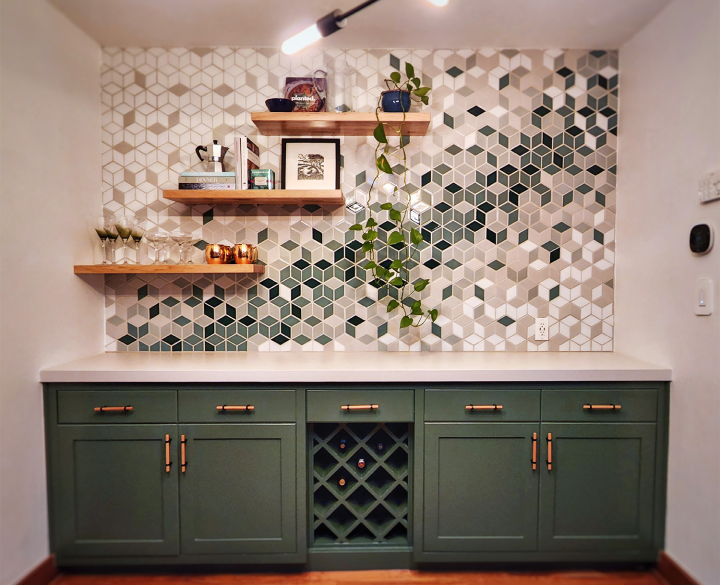
Built-to-spec kitchen, bathroom, and storage cabinetry — custom dimensions, species, and finish to match your home’s design exactly.

Floating shelves, mantels, trim work, and architectural wood details hand-crafted and installed to complement any room or renovation project.

Full kitchen, bathroom, and whole-home renovations — managed by a licensed General Contractor with 20+ years in the Round Rock area.
Most custom furniture and epoxy pieces take 2 to 6 weeks from consultation through delivery, depending on complexity. A simple floating shelf set runs faster than a full river table with multiple epoxy pours. Each layer of resin requires 16–24 hours of cure time before the next can be added, and the full epoxy cure is 5–7 days minimum — we don’t rush the chemistry. You’ll receive progress updates throughout.
Because every piece is built to your specific dimensions, wood species, and design, we price each project individually. During your consultation, Jeff provides a clear, itemized proposal covering materials, labor, and finish — before you make any commitment. There are no hourly mystery fees and no add-ons that appear mid-build. Ask about our Spring Special for qualifying projects over $5,000.
That’s exactly what the consultation is for. Jeff walks you through the available slab inventory in person — you can see, touch, and compare black walnut, white oak, maple, cherry, mesquite, pecan, and other species currently in stock. The right wood depends on the piece’s use, your home’s existing palette, and your personal preference. Jeff makes recommendations but the final choice is always yours.
Yes — and there are more options than most people expect. Standard river-table pours use pigmented or translucent epoxy in blues, greens, blacks, or naturals. Metallic mica powders create shimmering, liquid-metal effects. Alcohol inks produce geode-style patterns. Void fills can be clear or tinted. Jeff walks you through color options with samples during the consultation so there are no surprises when the pour is complete.
Yes, when it’s made correctly. Mitchell’s epoxy tops are cured fully at controlled temperatures, wet-sanded through fine grits, and finished with appropriate topcoats. Properly made epoxy furniture is heat-resistant to normal household conditions, scratch-resistant with basic care, and will not yellow the way low-grade consumer resins do. Bar tops and dining tables that will see heavy use receive a catalyzed polyurethane finish for maximum durability.
A river table uses two live edge slabs placed with their natural edges facing inward, with a channel of pigmented or clear epoxy filling the gap between them — the visual effect resembles a river flowing between two banks. A flood coat top covers the entire face of the wood slab with a level, clear epoxy layer, enhancing the grain underneath while creating a glass-smooth surface. Both techniques are available; the right choice depends on your aesthetic goals and the piece’s intended use.
Yes — this is one of the things that sets working with Mitchell Woodwork apart. Jeff maintains an active live edge slab inventory at the Round Rock shop. You’re welcome to come in, look through what’s available, and choose the actual piece of wood that will become your table or bar top before any work begins. Many clients say this is one of the most enjoyable parts of the whole process.